| Beyond Energy
Hydrogen is the most abundant element in the universe, constituting 75% of its mass. It is a colorless, odorless, and tasteless light gas. However, hydrogen rarely exists independently in nature and is usually found combined with other elements. Despite being the most common element, commercializing hydrogen as an energy source has been challenging due to the high costs and energy consumption required for its separation. As a result, fossil fuels like gasoline and diesel have remained the primary energy sources for power generation and transportation.
Since the Industrial Revolution, the increased use of fossil fuels has accelerated global warming. This has led to various social issues, intensifying global awareness and responsibility towards climate change.
Hydrogen is gaining attention as a clean energy source that can address these problems. Unlike fossil fuels, hydrogen does not emit greenhouse gases during energy generation. The use of hydrogen fuel can reduce annual CO2 emissions by approximately 6 billion tons.
The utilization of hydrogen’s properties to establish an economy that uses hydrogen as a primary energy source is known as the ‘hydrogen economy.’ Globally, efforts are being made to promote the hydrogen economy by establishing infrastructure and expanding its applications across all stages of green energy production, distribution, and utilization.
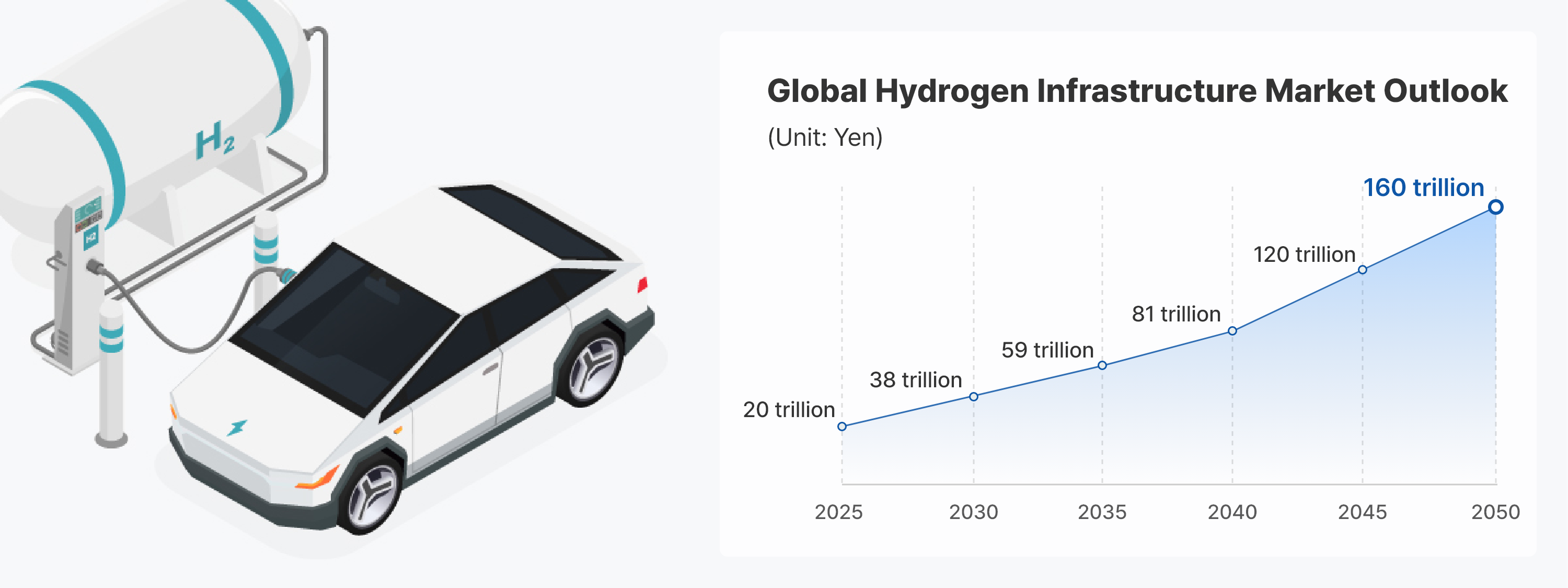 [Source] ‘Global Hydrongen Infrastructure Project Overview’ by Nikkei BP Cleantech Research Institute
| Expansion of Hydrogen-Powered Commercial Vehicles
The hydrogen economy is rapidly growing in South Korea as well. With government policy support, increased corporate investments, and technological advancements, the domestic hydrogen energy industry is seeing a positive outlook, particularly with the increasing adoption of hydrogen buses.
Goverment Policy SupportThe government is implementing various policies to foster hydrogen energy as a national strategic energy source. The Hydrogen Basic Plan, established in December 2020, aims to secure 5.2GW of hydrogen production capacity, deploy 1.3 million hydrogen fuel cell vehicles, and invest 30 trillion KRW in hydrogen energy by 2040. Legislative changes across the production, storage, transportation, and utilization of hydrogen energy are being made to ease regulations and boost the industry. Tax incentives for hydrogen fuel cell vehicle purchases and hydrogen energy investments are also in place to stimulate industry growth.
Technological AdvancementsHydrogen energy-related technologies are advancing rapidly. High-efficiency hydrogen production technologies, such as electrolysis, ammonia decomposition, and biomass gasification, are being developed. Additionally, safe and cost-effective hydrogen storage technologies, including high-pressure compressed hydrogen, liquefied hydrogen, and metal hydrides, are progressing in various ways. The development of hydrogen storage technology is crucial for the widespread availability of safe refueling stations, playing a significant role in enhancing the economic viability of hydrogen energy.
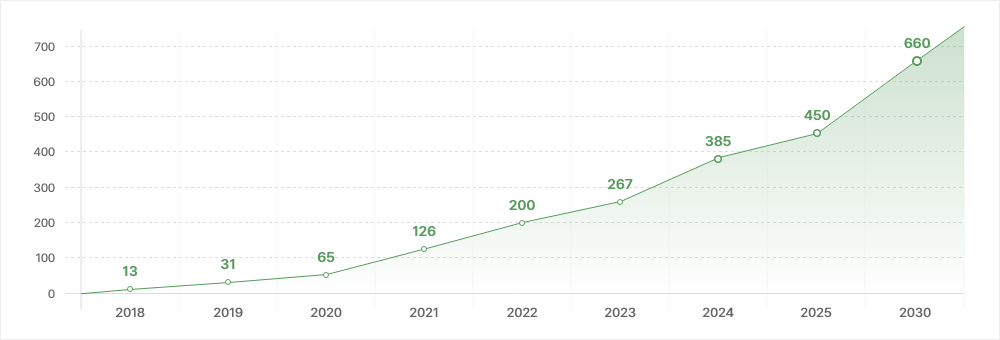
Currently, there are 175 hydrogen refueling stations (300 dispensers) in South Korea, with numbers expected to continue increasing.
Expansion of Hydrogen BusesThe transition from diesel and CNG buses to electric and hydrogen fuel cell buses is accelerating. According to the Ministry of Environment, the plan is to replace 2,700 buses with hydrogen buses by 2024 and reach a total of 20,000 hydrogen buses by 2030.
In addition, intercity and express buses will be replaced with hydrogen buses. The government is actively supporting the deployment of hydrogen buses by providing incentives for purchasing hydrogen buses in the performance evaluation of public institutions’ low-emission vehicle purchase and lease obligations.
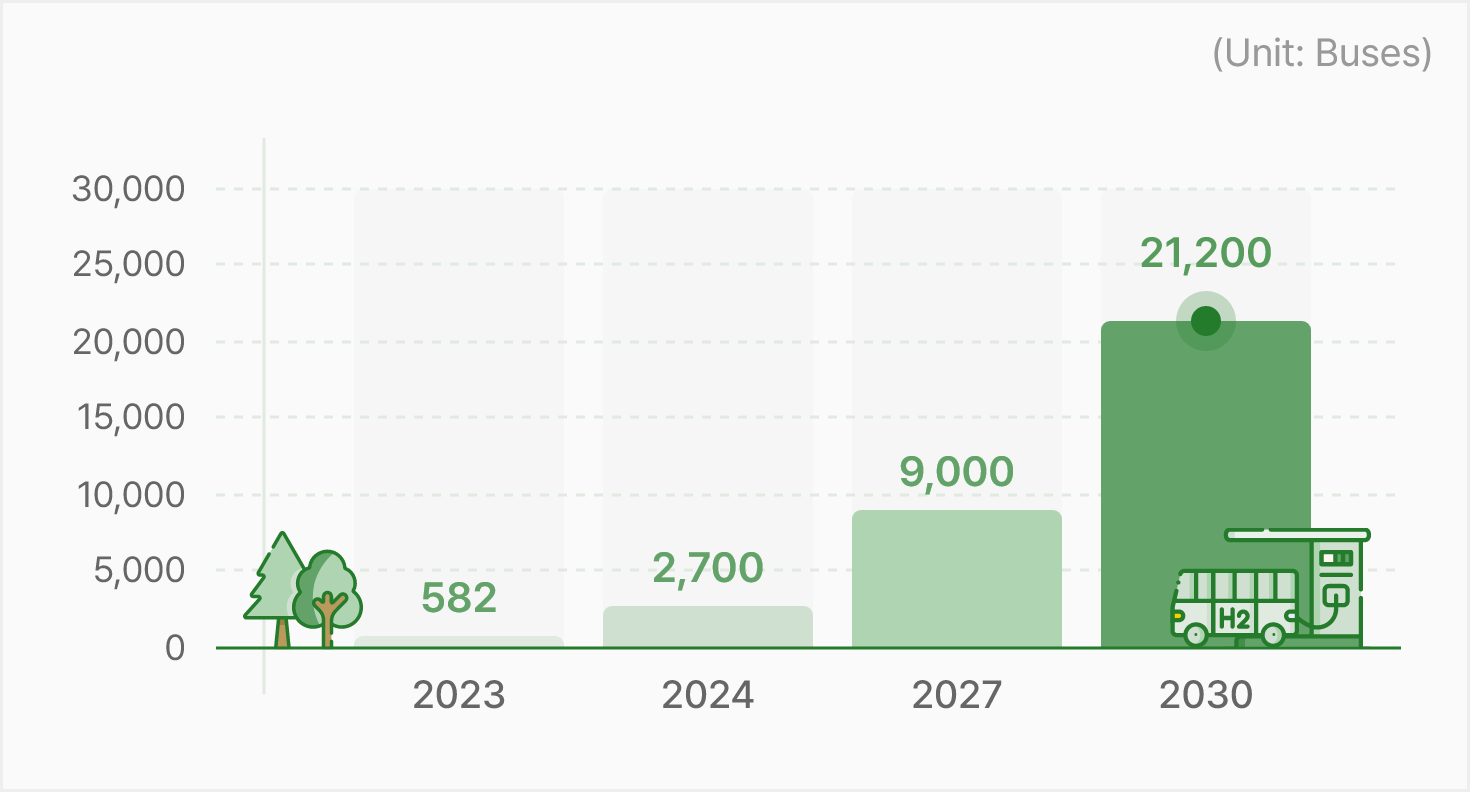 Domestic Hydrogen Bus Deployment Plan[Source] Ministry of Environment
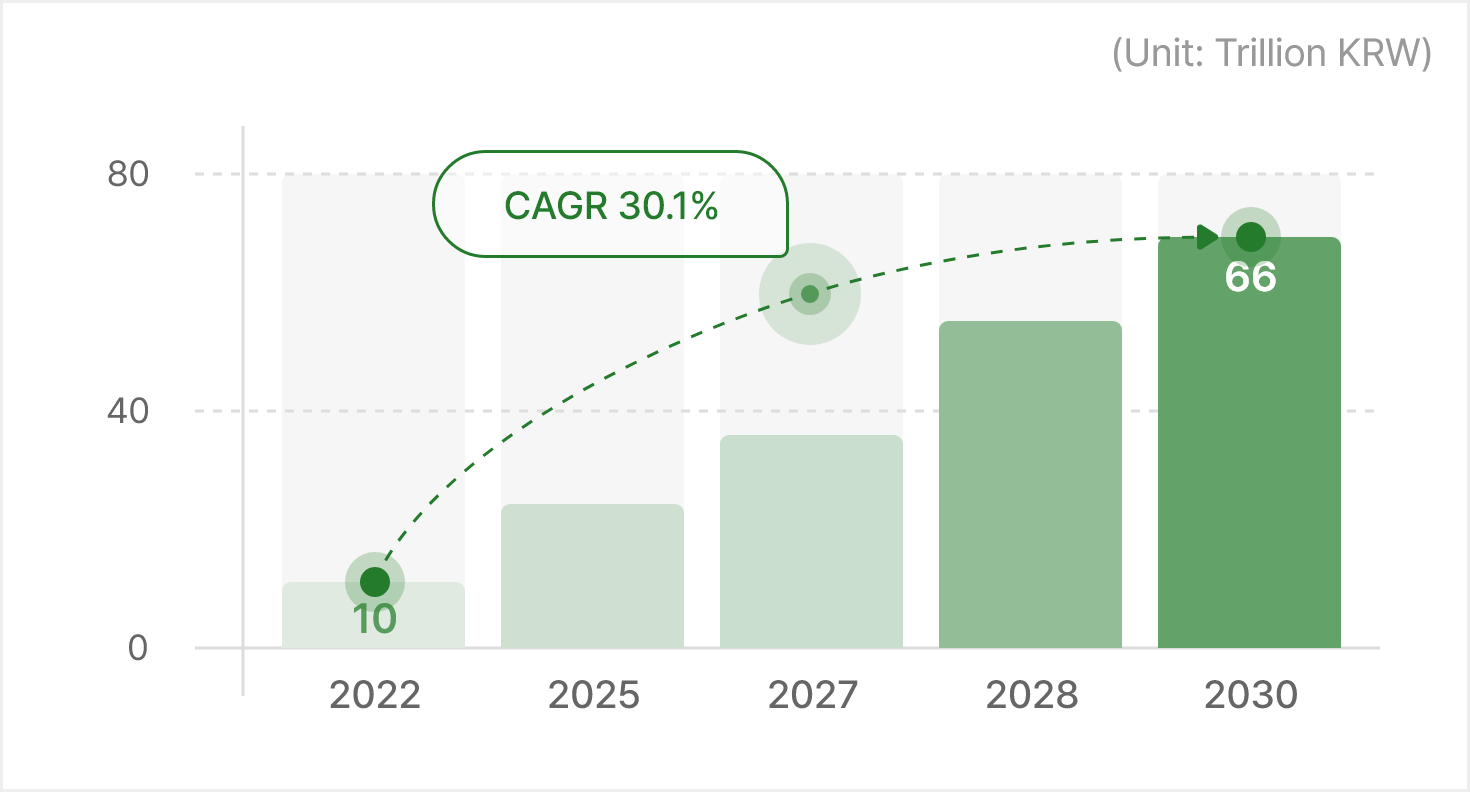 Global Hydrogen Bus Market Outlook[Source] Vantage Market Research
Seven major companies, including Samsung Electronics, plan to transition over 250 commuter buses to hydrogen buses by the end of this year and more than 2,000 buses by 2026. To support this, the government has expanded the budget for hydrogen bus purchase subsidies by 2.5 times, focusing on nationwide deployment.
The global hydrogen bus market is also expected to grow at an annual rate of 30.1%, from 10 trillion KRW in 2022 to 66 trillion KRW by 2030.
The German state of NRW aims to introduce 3,800 hydrogen buses for public transportation by 2030. In Europe, IVECO and Hyundai Motor are establishing a plant to jointly produce hydrogen fuel cell buses, with plans to produce 3,000 buses by 2026 and supply 1,000 buses annually to the European market from 2027.
These efforts to accelerate the deployment of eco-friendly buses aim to reduce carbon emissions, decrease reliance on fossil fuels, and improve urban air quality.
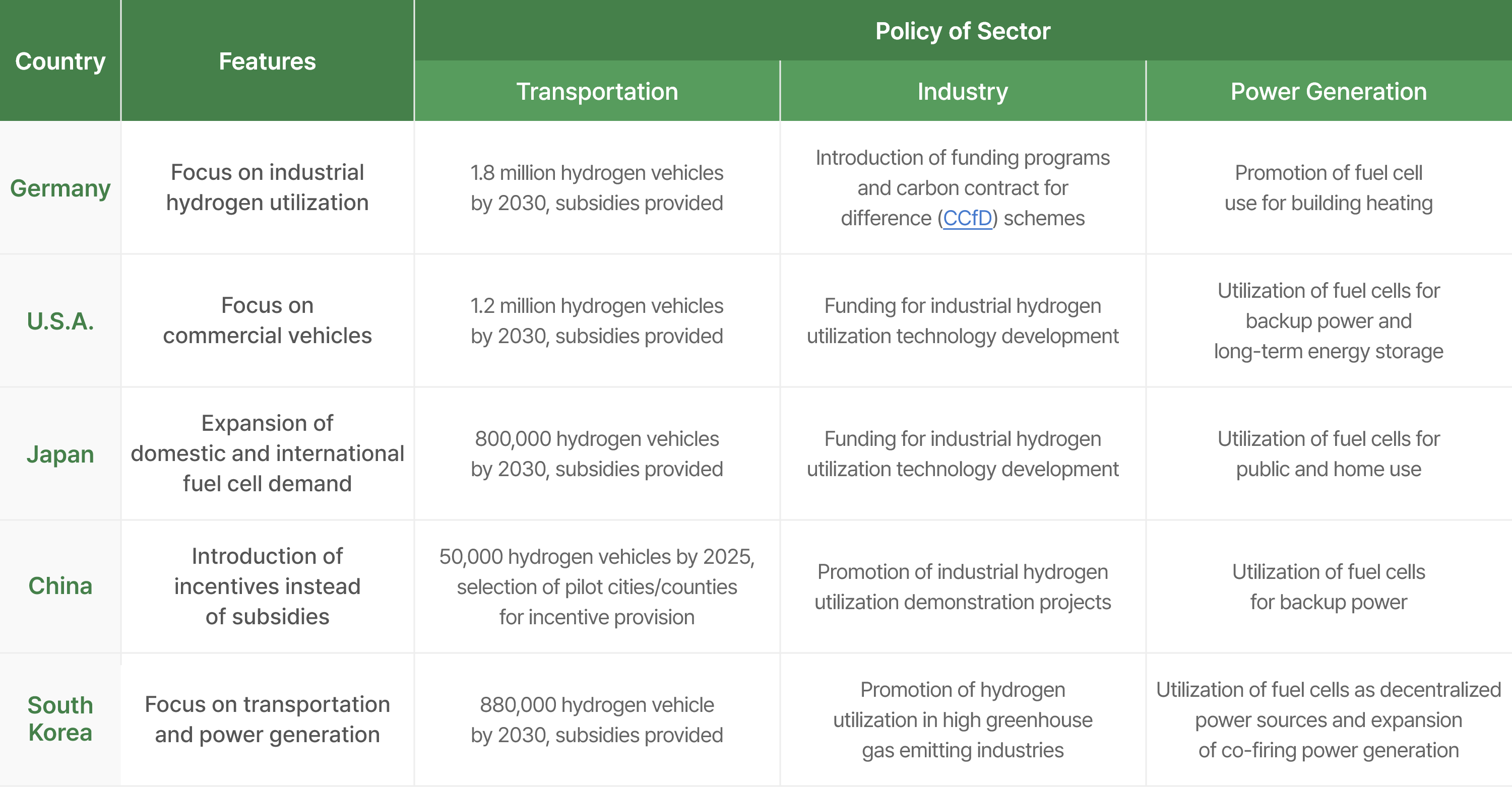 Country-Specific Hydrogen Utilization Policies[Source] Ministry of Environment
DK-Lok is preparing for the future hydrogen market by obtaining EC79 certification for ORFS Fittings(O-Ring Face Seal Fittings) and Two-Ferrule Lok Fittings from a European standard certification body in 2019. This certification for hydrogen vehicle fittings recognizes DK-Lok’s technological capabilities. Leveraging this competitiveness, DK-Lok currently supplies over 30 types of products to the hydrogen commercial vehicle and refueling infrastructure markets.
Go to DK-Lok’s Hydrogen Products