A valve is a device installed on piping or pressure vessels to regulate or block the flow of fluids (liquids, gases, steam, etc.) within the system. Unlike simple fittings that merely connect pipes, valves are equipped with functions to control the flow of fluids.
A system cannot function solely by allowing fluids to flow freely. It requires functions such as blocking, regulating, changing direction, and preventing backflow. Accordingly, valves are categorized into various types, and the appropriate valve should be chosen based on the required function.
| Backflow Prevention
·Check Valve
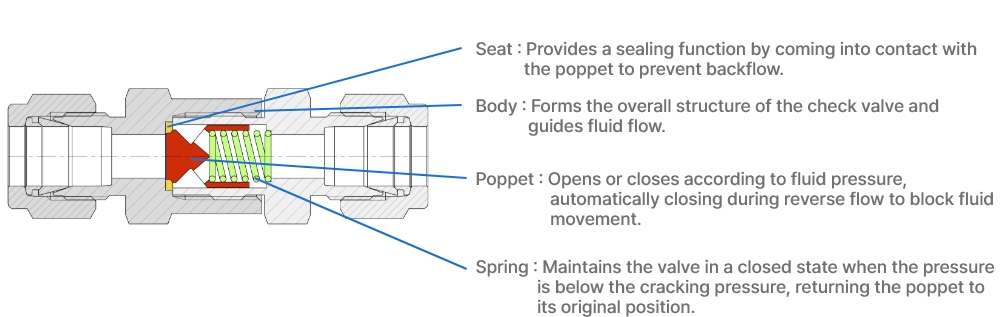
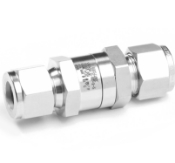
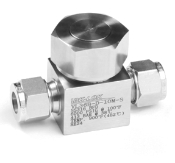
A check valve is designed to allow fluid to flow in only one direction, preventing backflow. The poppet automatically opens when pressure is applied and closes when the pressure decreases or reverse flow occurs, thereby blocking the flow.
The internal structure is consist of Body, Poppet, Spring, and Seat.
| Fixed Cracking Pressure Type |
One-Piece | Adjustable Cracking Pressure Type |
High-Pressure Check Valve |
Lift Check Valve | |
|---|---|---|---|---|---|
| Category | 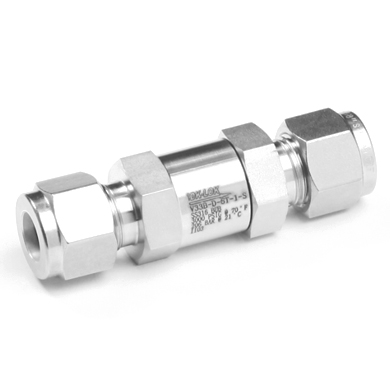 |
 |
 |
 |
 |
| Model | V33 | VP33 | VA33 | VH36 VCH36 NGV Valves |
VL36 |
| Features |
|
|
|
|
|
| Usage | General industries, instrumentation lines, etc. | General industries, instrumentation lines, CNG systems, etc. |
General industries, instrumentation lines, etc. |
||
·Relief Valve
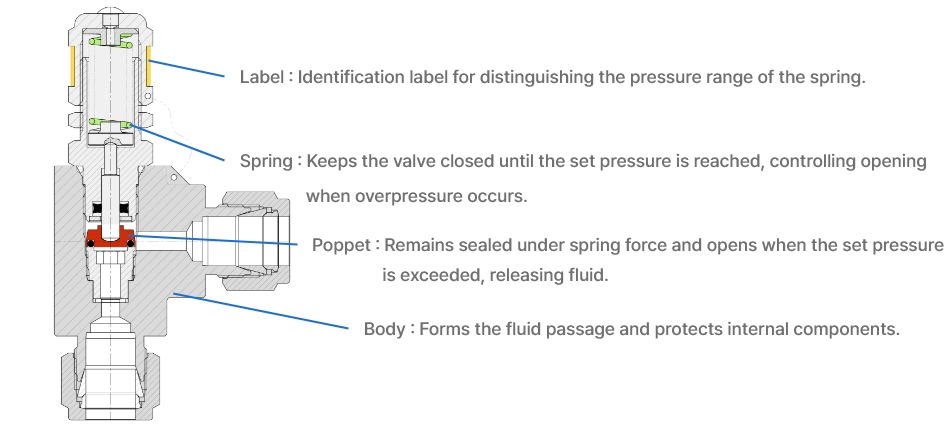
A relief valve is designed to open when the pressure exceeds a predetermined set point, thereby maintaining safe pressure levels within the piping system. It serves to control pressure gradually to prevent excessive pressure buildup within the system.
| Category | Model | Features | Usage | |
|---|---|---|---|---|
| 3,000 psig | 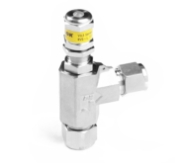 |
V63 |
|
General industries, instrumentation lines, etc. |
| 6,000 psig | 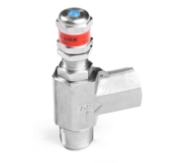 |
V66 |
·Safety Valve
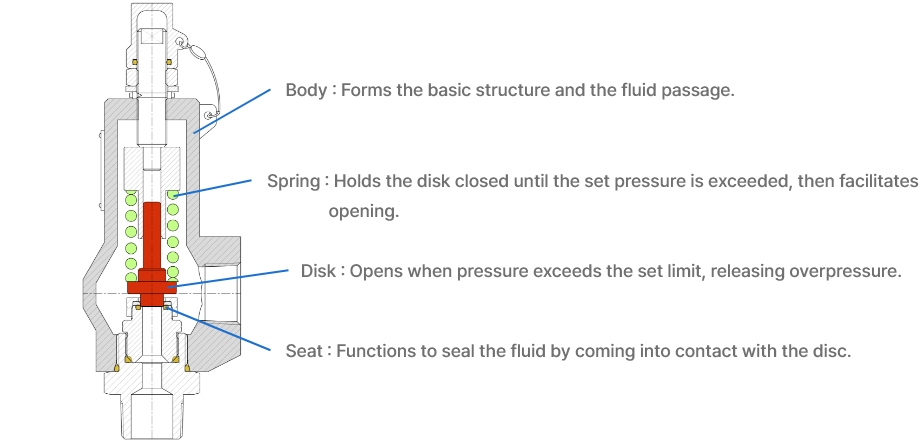
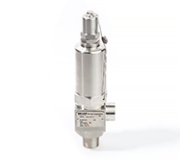
A safety valve serves to protect the system by releasing excessive pressure. It opens completely when the set pressure is reached, quickly discharging the excess pressure to prevent system damage.
| Category | Model | Features | Usage | |
|---|---|---|---|---|
| 6,000 psig | 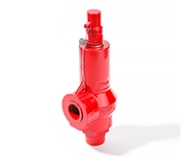 |
V64 |
|
General industries, instrumentation lines, etc. |
| 6,000 ~ 14,500 psig |
 |
V64H |
|
·Manifold
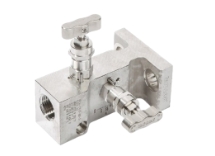
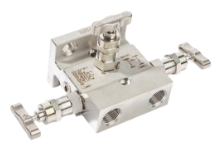
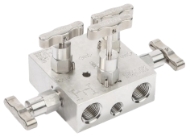
Manifolds come in 2-valve, 3-valve, and 5-valve configurations, primarily mounted on transmitters to control fluid. 2-valve manifold is used for static pressure control, while 3-valve and 5-valve types are used for differential pressure control.

2-Way Valve
-
3-Way Valve
-
5-Way Valve
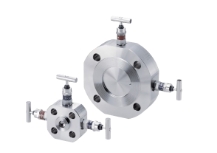
·DBB & MONO Flange
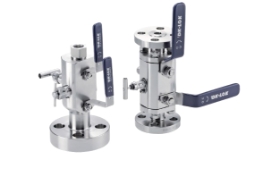
DBB (Double Block & Bleed) consists of two isolation valves and one bleed valve. It combines the functions of three separate valves into one, reducing installation space and enhancing efficiency. The shut-off valves are typically ball valves, and the bleed valve is a needle valve. It is tested for fire safety (API 607) and hazardous substance emission regulations (FE Test).
-
Double Block Bleed
-
Monoflange
Valves are not merely connecting components but essential elements that precisely regulate fluid flow, ensuring system safety and efficiency. Each valve type is designed for specific functions and conditions, making it crucial to choose the appropriate valve to optimize system performance and maintenance costs.